The Soles of the Buddha’s Feet – Bangkok 2017 pt. 2

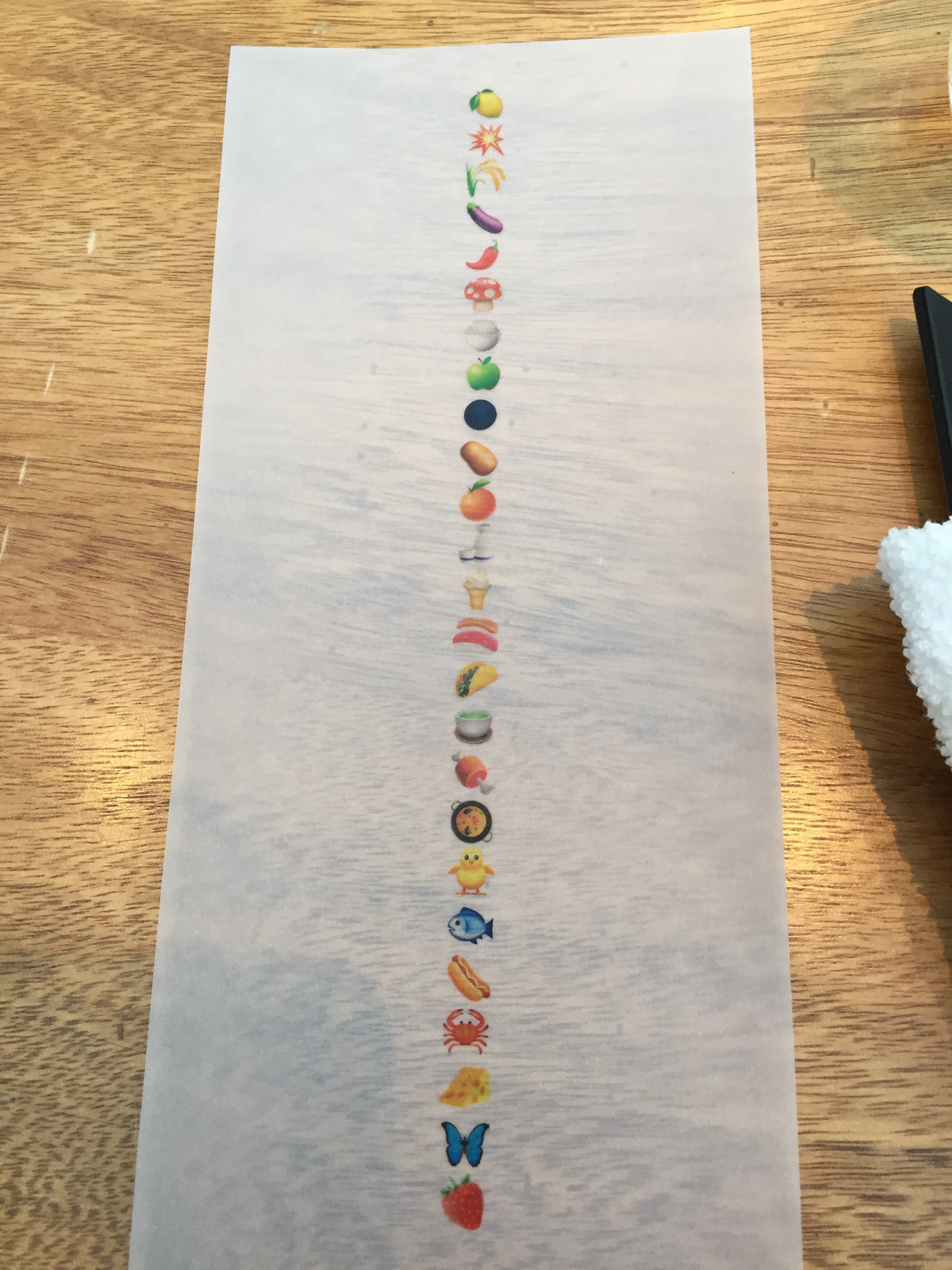
Last night, we had dinner at Gaggan, which was amazing and wonderful. The tasting menu was in emoji, which was very silly, but it encouraged discussion and gave the whole thing a less serious feel than it might otherwise have had. But more about that in a different post.

Today was a big contrast from that, in some ways. I was by myself much of the day, and it was very contemplative and austere. I got up earlyish, around seven, and headed out to Wat Pho, a big Buddhist temple complex next to the Grand Palace. I had with me the bag I bought yesterday.

I just followed the directions on Google Maps and reflected on how much simpler travel has gotten over the years. One train ride and I transferred to a commuter ferry, then six stops or so and I was in the right area. Much more straightforward than I was expecting.  Continue reading

Bossa Nova Covers of American Pop Songs – Bangkok 2017, pt. 1

Hey there, probably-nonexistent readers. I’m on a trip to Thailand, Cambodia, and Vietnam right now. I’m sitting in a cool jazzy little cafe writing this on an unlocked phone that my husband had sitting around. This is actually my first time traveling overseas with very much of a data plan at all (2GB for $8 at the airport is a steal), and it’s nice. The best part is Google Maps, but being able to look things up more generally is good too. In a pinch, it’s also good if I get bored, but I’ve been trying to work on presence more and so far I’ve only gotten bored while using the bathroom, which I think is close to a human universal.

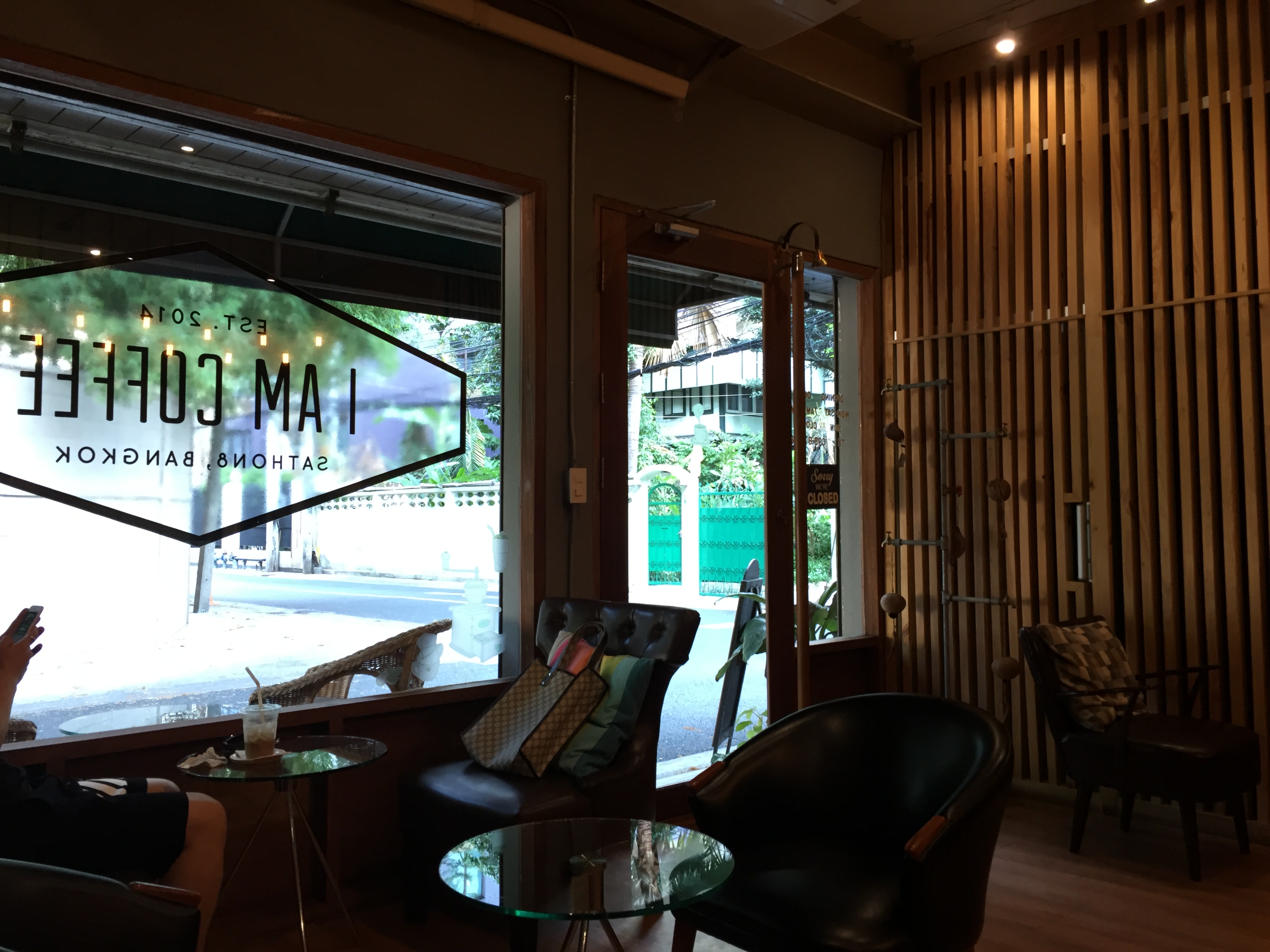
Here’s the cafe I’m in, which has a great name, don’t you think?

IMG_0070 I haven’t done a whole lot. Went to the mall because I packed the one pair of shorts I own and realized I would probably need another. The mall, Terminal 21, was interesting. Each level is decorated like a different city. The food court, which is excellent, was San Francisco. Can’t get away from that place! It’s much cleaner here, though.

IMG_0031

“San Francisco”

Continue reading

Tattooed Characters

As you may know I love procedurals and mysteries. Over the summer and fall I watched a lot of House, which is essentially a police procedural set in a hospital, and then when that ran out I wanted something lighthearted that I could stream before bedtime. For now I’ve settled on Rizzoli & Isles, which is sometimes dreadful but always soporific.

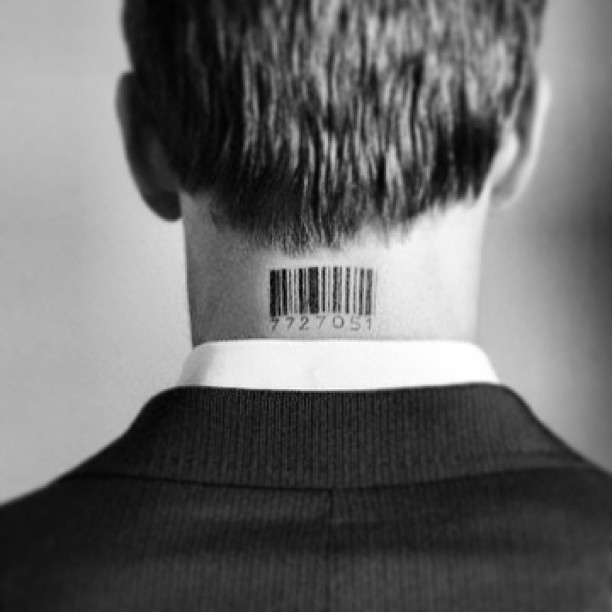
Anywho, the episode I watched last night involved a character who had a tattoo of a QR code. (It was actually a pretty good episode, too.) It got me thinking about tattoos on characters more generally. Marked bodies have relevance in all kinds of fiction, though the one I’m most familiar with is Germanic mythology and Norse sagas. In both, but especially in the sagas, very little physical detail about characters is given. When a detail is given, it’s one of the ways that you know that a character is not only important but different somehow. For instance, Odin only rises to his highest level of significance after he trades an eye for a look into the future.

This is an extreme example of conservation of detail, where you only mention things that are, in one way or another, relevant to the story. These can be scene-setting details and grounding details, or a way of getting to know a character better. In some genres, like historical fiction, a lengthy depiction of the setting is part of the form. In a Victorian Briefroman, an overly-formal description of characters and customs, even if not at all related to the plot, is expected. (I don’t care for the latter specifically because of this, but that’s merely a matter of personal taste.)

This is especially true in time- and space-limited formats like an hour-long mystery. You literally only have time for clues and red herrings and a bit of verisimilitudinous detail. So when this character was tattooed, it was important, especially because it wasn’t the sort of person you’d usually associate with a tattoo. A QR code is also something that contains explicit data, and probably isn’t just an asethetic throw-away. Unless it’s part of an extensive description of Maori tattoos or something else genre- or setting-relevant, then, a tattoo is a pretty important thing to put on a character.

I don’t currently have any characters with tattoos. I’m sure that I will soon, especially in the urban fantasy story that I’m working on (more on this to come!).

Finally, some random questions.

  • If you had a tattoo of a barcode, a normal barcode that represents a number, what would it be?
  • What about a QR code, which (usually) represents a URL?
  • I’ve long thought that a regular expression would make a fun tattoo. What pattern would you match?

Happy new year!

Annual music video:

I am gonna make it through this year if it kills me

2016 was horrid. In many ways it was the final nail in the coffin of the 20th century, much like 1914 finally ended the 19th century. The brief flash of the “information age” has given way to the age of voluntary ignorance; 20th century utopian projects are crumbling (Communism, internationalist capitalism, trans-Europeanism, neoconservatism) as we saw base authoritarianism reassert itself across the world. Oh well.

Interesting time to be alive. Stay frosty.

“Getting News From Facebook”

Every so often, a number becomes part of the journalistic zeitgeist. Sometimes it’s linked to a single factoid, sometimes it’s free-floating. You see it around, and sometimes it’s right, but a lot of the time it’s misleading or just plain made-up.

Brooke Gladstone writes about one of these in her graphic manifesto The Influencing Machine (pp. 49-54). The number in question is 50,000. Specifically, 50,000 human victims. It would pop here and there about a variety of different things. Most recently, it was reported (by Attorney General Gonzalez no less) as the number of child predators online at any time. Before that, it was the number of people sacrificed by satanic cults (remember the 80’s?). Before that it was reported as the number of children abducted by strangers in a year, even though the actual number was maybe 250.

And the more she looked into it, the more she found out that “50,000 people die” every year from… everything! At least, if the media can be believed. Where does this number come from? Gladstone calls it ‘the Goldilocks number’. Not “a really small number… like 200. And [not] a ridiculously large number… like 10 million. It [is] a Goldilocks number. Not too hot, not too cold.”


Recently something similar had pinged my radar. Specifically, that 44% of adults get their news from Facebook. Or from Twitter. Or from social media in general. Or, or…

Pretty shocking, right? I mean, those aren’t reputable news sources!

This number seemed fishy to me because it couldn’t possibly be that high. First of all, it doesn’t pass the smell test – are 44% of adults even on social media? (Yes, barely.) Well, I didn’t look into it myself, but fortunately somebody did for me. It seems to be a case of semantic drift that lends itself to sensationalism. Basically, 44% of adults, as measured by a Pew survey, report that they “get news” from Facebook, either often, sometimes, or rarely. Basically everybody who didn’t answer “never”.

What’s the difference between people “getting news” and people “getting their news”? Well, kind of everything. To get news is to receive an unknown but non-zero number of news items; to get one’s news is presumably to get all or most of the news items one consumes. This dovetails nicely with people liking to report on how technology is ruining civilization, so it’s used that way. I wouldn’t be surprised if we see this number popping up increasingly in the latter context of people getting their news on Facebook, which as we know contains a large amount of ‘fake news’ (a term that with alarming speed became completely meaningless). Etc., etc.

So if you see 44% (or its cousin 68%) popping up in this context, well, now you know.

Gladstone concludes her book by saying that ‘we get the media we deserve’. I’d like to think we aren’t this bad, though.

Write What You Know

In one of my writing classes in college the teacher started us off with an essay about that old saw, ‘write what you know’, and how you actually know a lot more than you think. You might not know a lot about being an undocumented Salvadorean immigrant, but maybe you remember your first time in a strange place and how it smelled different–what it was like to encounter a completely new olfactory profile. Maybe it was alienating or freeing. But the specifics aren’t particularly important now that you have a frame for it. You’ve just leveraged your lived life to add some realism to a strange character. 

And you don’t need a lot of this. A technique that Ray Carver used a lot, and to great effect, is something I like to call ‘pointillistic realism’. He often worked in threes. Just listed three things. One was usually highly evocative:

Mel handed me the saucer of limes. I took a section, squeezed it over my drink, and stirred the ice cubes with my finger.

There’s a Tobias Wolff story where he describes a scene outside as containing ‘teenagers selling oregano to tourists in white shoes’ or a very similar phrase. When I read that the first time I knew exactly what street he was talking about. The street could be anywhere, but you know that kind of street too.

So it doesn’t take very much detail to evoke something, and your life is already full of little details you can include to flesh out scenes and characters. So much of what we experience is universal. You just have to pick the right thing. So by all means, write what you know–but you can get a lot further on that than it seems at first blush. 

What brought this to mind today is, I finally got the perfect picture of my morning commute. One of my characters takes the same train into town in the book I’m working on, and I’ve been imagining what it’s like to do for your first time.

Kenji woke Hideki up when the train got closer to San Francisco. The coastal range wrapped around South San Francisco and and joined with the highway on the left side of the train, and piers full of derelict ships and the biggest pile of garbage Hideki had ever seen greeted him on the right side. Kenji probably could have woken him up at a slightly different time. Hideki wondered if it had been intentional.

They went through a tunnel and entered the city proper. The graffiti that he’d seen hints of as they approached now showed up in force. It was like something out of a movie. There were unreadable words taller than he was, illegal but still beautiful murals, and some things that were probably ‘gang tags’, whatever it is those were. The rest was a familiar enough scene, with pallets leaning against shipping containers and garbage strewn here and there.

Maybe ‘here and there’ was the wrong term. Garbage was everywhere. But the people waiting at the 22nd street station didn’t seem to mind, or even really notice. Hideki got the impression that he’d be seeing a lot more trash than he was used to this trip.

Lampshades

I had an episode of House on in the background last night on Netflix while I was messing around on the Internet. After what would have been a commercial break, it shows House and Kal Penn’s character doing a walk-and-talk and Kal Penn summarizes what they’ve learned about the patient over the last ten minutes or so of story. House looks at him irritably (though does he do it in another manner ever?) and says, “what is this, some sort of recap?”

I find these things amusing. I also find them annoying if they’re overdone, but this just happened once, so it’s fine.

The end. 

Your Body Is Horrifying, pt. 1

Warning: rambling. -Ed.

It’s common, in trope-y writing, like horror or sci-fi, to intentionally make the reader feel a certain horror in or about their own body. This can also come up in authors who inhabit the ‘weird’ spectrum, like Borges or Murakami.

The thing about this is that it’s so easy. All I have to do is point out that you have a body.

We don’t like to think of ourselves as inhabiting a body. This comes in many flavors. Dualism is an extremely popular one. Your body is separate from your you. Your soul, your spirit, your whatever-you-want-to-call-it: your mind is not a part of your body, so your mind is not made of meat. Things made of meat are gross. We eat things made of meat. But your mind, which you’ve managed to separate from your body just by thinking about it (thinking is magical!), is still, you know, physically bound to your body. You can’t go anywhere that your meat doesn’t let you. You’re born meat, and you die meat.

Gross, right?

Now, there’s a second aspect to this. Bodies die. So we come up with elaborate mechanisms for which our bodies might die, but not us, not really. Dualism is a very strongly held belief in basically every school of thought, even atheism. So it’s not just that meat is gross–meat is mortal, too. Like I said, a lot of us eat it every day without really giving it a second thought. Any notion that your you-ness is all tied up in this meat nonsense is horrifying.

So how can I make sure you feel this? First, I can just tell you. You are mortal. You are made of meat. Like in this hypothetical children’s book from the inimitable Ryan North:
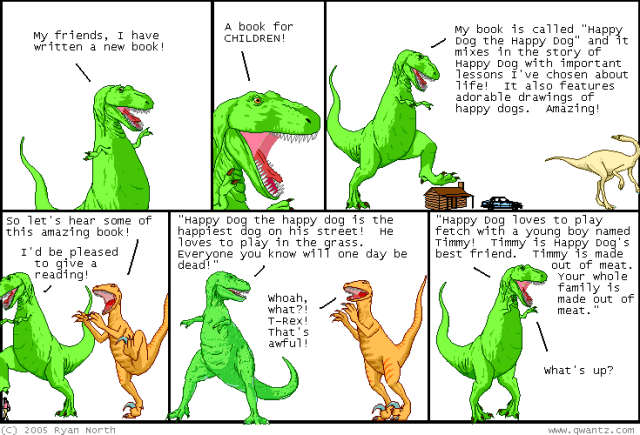
comic2-531
Or this gem, which Neal Stephenson sort of randomly plops down in the middle of a scene in Cryptonomicon:

The room contains a few dozen living human bodies, each one a big sack of guts and fluids so highly compressed that it will squirt for a few yards when pierced. Each one is built around an armature of 206 bones connected to each other by notoriously fault-prone joints that are given to obnoxious creaking, grinding, and popping noises when they are in other than pristine condition. This structure is draped with throbbing steak, inflated with clenching air sacks, and pierced by a Gordian sewer filled with burbling acid and compressed gas and asquirt with vile enzymes and solvents produced by many dark, gamy nuggets of genetically programmed meat strung along its length. Slugs of dissolving food are forced down this sloppy labyrinth by serialized convulsions, decaying into gas, liquid, and solid matter which must all be regularly vented to the outside world lest the owner go toxic and drop dead. Spherical, gel-packed cameras swivel in mucus greased ball joints. Infinite phalanxes of cilia beat back invading particles, encapsulate them in goo for later disposal. In each body a centrally located muscle flails away at an eternal, circulating torrent of pressurized gravy.

Isn’t that fun? In the first example, North just points out some meat and mortality; in the second, Stephenson makes it super gross. They’re not especially horrifying, I suppose, but they certainly make me nervous and a little squicked out, which is the point.

One thing that is horrifying, in its own special way, is a sci-fi short story (and a wonderful short film version) that does just this (linked above as well), in which the fact that we’re made out of meat is described from the point of view of somebody who is just now discovering that it’s even possible for something sentient to be made out of meat:

“They’re made out of meat.”

“Meat?”

“Meat. They’re made out of meat.”

“Meat?”

“There’s no doubt about it. We picked up several from different parts of the planet, took them aboard our recon vessels, and probed them all the way through. They’re completely meat.”

“That’s impossible. What about the radio signals? The messages to the stars?”

“They use the radio waves to talk, but the signals don’t come from them. The signals come from machines.”

“So who made the machines? That’s who we want to contact.”

They made the machines. That’s what I’m trying to tell you. Meat made the machines.”

“That’s ridiculous. How can meat make a machine? You’re asking me to believe in sentient meat.”

“I’m not asking you, I’m telling you. These creatures are the only sentient race in that sector and they’re made out of meat.”
[…]

This upsets the aliens enough that they decide to declare the sector uninhabited, erase all records of humanity, and move on. Later, they muse about how lonely it must be, thinking you’re alone in the universe, except they’re talking about an intelligent crystal or something or other.

So, in order to make you feel weird about your body (which is of course all you are and ever will be), I can:

  • Remind you that you’re mortal
  • Describe your body in excruciating detail
  • Talk about your body as though I’d never seen a body before

And we haven’t even gotten to the part where I have you imagine anything even happening to your body. All of these examples so far are just descriptive.

In Murakami’s The Wind-Up Bird Chronicle, one of the characters has a scar on her face and something wrong with her leg. He tends to mark his characters like this. In 1Q84 one of them has a weird ear. Body marking is also very important in the Germanic epics and sagas. This is the realm of injuries and minor mutilations. It sets people apart as different, or important, or both. That’s all another post though.

For now, man, how weird is it that you have a body?
The World Beyond Eels: Readers Wanted

Hey folks,

I’m working on a big overhaul of the fish story (now The World Beyond Eels) and just finished up Act I. It’s around 20,000 words, 50 or 60 pages. If you’re interested in giving me some feedback (and, of course, reading it!), send a message to theworldbeyondeels at gmail dot com. Let me know who you are so I know you aren’t some kind of robot Russian identity theft plagiarist. 

Here’s the new prologue. 

On Tuesday, just before noon, the last fish was caught. It was a mahi-mahi. It was unceremoniously thrown off the gaffe and onto the deck of the boat, where it was beaten to death with an unremarkable baton and then gutted with a machete. The fisherman hosed it down afterwards, and the bloody water poured out of the scuppers and into the sea. It was, he would later report, delicious.

Nobody learned a valuable lesson about overfishing or climate change, or had an epiphany about coral bleaching or any of that ‘responsible’ stuff. Nobody tried to start a consciousness-raising group for kids about taking care of Earth better than their parents had.

This wasn’t because humans aren’t a clever and adaptable species. We are. We deal well, if not always wisely, with changing circumstances, with quick changes and with gradual ones, too. Think about the miracles you can pull off just with duct tape. You can look down at the jacket of your friendly neighborhood gutter punk, or all the way up to the space missions that we thought were doomed, to see all the things we’ve managed to rescue with that stuff.

No, we didn’t learn any valuable lessons about the environment because, for once, this particular fuck-up had nothing to do with the environment—on Tuesday, every living fish on the planet simply disappeared. Poof. Gone.

Just because we didn’t learn much didn’t mean that this wouldn’t bring civilization to its knees, what with all the ecological and cultural devastation. Of course all of that happened. And don’t worry, you’re going to hear all about it. I suppose most people would probably start by telling you about the tsunamis. But we’ll start somewhere a little more pedestrian. Eastern Colorado, to be specific.

Technology iz in ur kidz brainz, ruining ur civilization‽ 👻 🆒 🆕 🆓 🔚 🔜 #sorrynotsorry 😏 😎

There was a thing going around recently. I didn’t see the ‘original’ but I did see the response. I’ll excerpt the juicy bit here, go read the whole thing.

Technology and the death of civilisation

It is a failing of human nature to detest anything that young people do just because older people are not used to it or have trouble learning it. So I am wary of the “young people suck” school of social criticism. -Steven Pinker

[…]

Late last year this photograph of children looking at their smartphones by Rembrandt’s ‘The Night Watch’ in the Rijksmuseum in Amsterdam started doing the rounds on the web. It quickly became viral. It was often accompanied by outraged, dispirited comments such as “a perfect metaphor for our age”, “the end of civilisation” or “a sad picture of our society”.

Clearly, to lots of folk, the photograph epitomised everything that is wrong with young people these days and their ‘addiction’ to technology. These children were being distracted by their technology to such an extent that they weren’t paying any attention to the beauty surrounding them in the real world.

Only they weren’t. It turns out that the Rijksmuseum has an app that, among other things, contains guided tours and further information about the works on display. As part of their visit to the museum, the children, who minutes earlier had admired the art and listened attentively to explanations by expert adults, had been instructed to complete an assignment by their school teachers, using, among other things, the museum’s excellent smartphone app.

Children listening to adult instruction at the Rijksmuseum

I wonder whether the photo would have caused so much indignation and disapproval if it had depicted students ‘ignoring’ the masterpiece while reading a paper leaflet or museum brochure instead. Though I suspect not. It would appear that, once again, reports heralding the death of civilisation at the execrable hands of technology might have been greatly exaggerated.

(The quote at the top is by Steven Pinker, who had a book out about how we’re pretty much living in the least violent era in human history a few(?) years ago that I understand is pretty good.)

Technology has always been a bugbear of… I’m not even sure who. Old people? I think Douglas Adams was right:

I’ve come up with a set of rules that describe our reactions to technologies:

  1. Anything that is in the world when you’re born is normal and ordinary and is just a natural part of the way the world works.
  2. Anything that’s invented between when you’re fifteen and thirty-five is new and exciting and revolutionary and you can probably get a career in it.
  3. Anything invented after you’re thirty-five is against the natural order of things.

These things like the top quote is talking about get old. It just isn’t true that things have really changed. The only thing that I’ve ever encountered that changes when a new information technology is introduced is you, and even then it’s in one very specific case. I don’t have a cite for this, but it’s in the beginning of The Information by James Gleick (which is a wonderful read). Basically, non-literate people have trouble with abstract reasoning. When asked a simple syllogism, it goes something like this.

“All bears from the north are white. Nanook is a bear from the north. What color is Nanook?”

“I don’t know, I’ve never met Nanook.”

Within a short time of learning how to read, they’re able to answer it correctly. (God, I really wish I had that cite.) But otherwise, all of the books about ‘Internet brain’ or whatever they call it are baseless and stupid. For a fun exercise, the next time you see a book or article or whatever about how technology is changing us–particularly information technology–try swapping out ‘the Internet’ or ‘Snapchat’ or whatever the complaint is about with something older. Like books, radio, the telegraph, newspapers, or the post office.

People said the same things about those! XKCD had a good summary of some recent ones: Continue reading